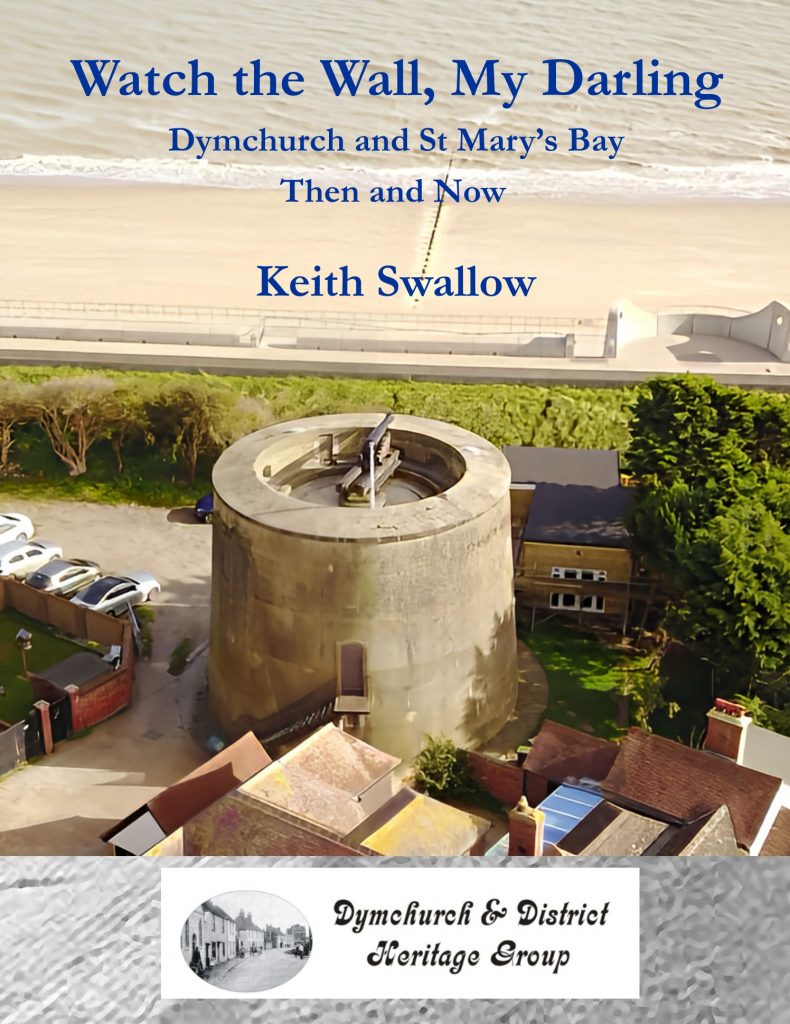
For many, Dymchurch is synonymous with smuggling, as immortalised by authors Russell Thorndike and Rudyard Kipling. Indeed, Kipling’s poem even references Dymchurch’s sea defences, beseeching a child to turn a blind eye and ‘watch the wall my darling while the gentlemen go by’. Yet there is so much more to the area than a smuggling past. In 1908, the biographer and newspaper editor Walter Jerrold told his readership that Dymchurch was ‘a delightful place, far from the madding crowd’. Other influential literary figures clearly agreed, with the likes of H.G. Wells, George Bernard Shaw and Edith Nesbit, as well as Thorndike, all spending holidays here.
At that time, St Mary’s Bay did not exist; all that was there was a farm with a few scattered outbuildings. Events in World War I, however, provided an unlikely springboard for its development, whilst tourism was behind a massive change for both communities throughout the rest of the 20th century. Nevertheless, many of the buildings that so captivated Jerrold remain. The large sandy beaches are still amongst the finest in England and the wonderful Romney, Hythe & Dymchurch Railway – which has now endured for nearly a century – offers an out-of-the- ordinary connection to other parts of the unique Romney Marsh. On top of all this, as part of the ‘Invasion Coast’, the area has played a key role in the defence of the nation. The history of these two villages is truly fascinating.
2026 ISBN 9781739344450; Price £18.00